
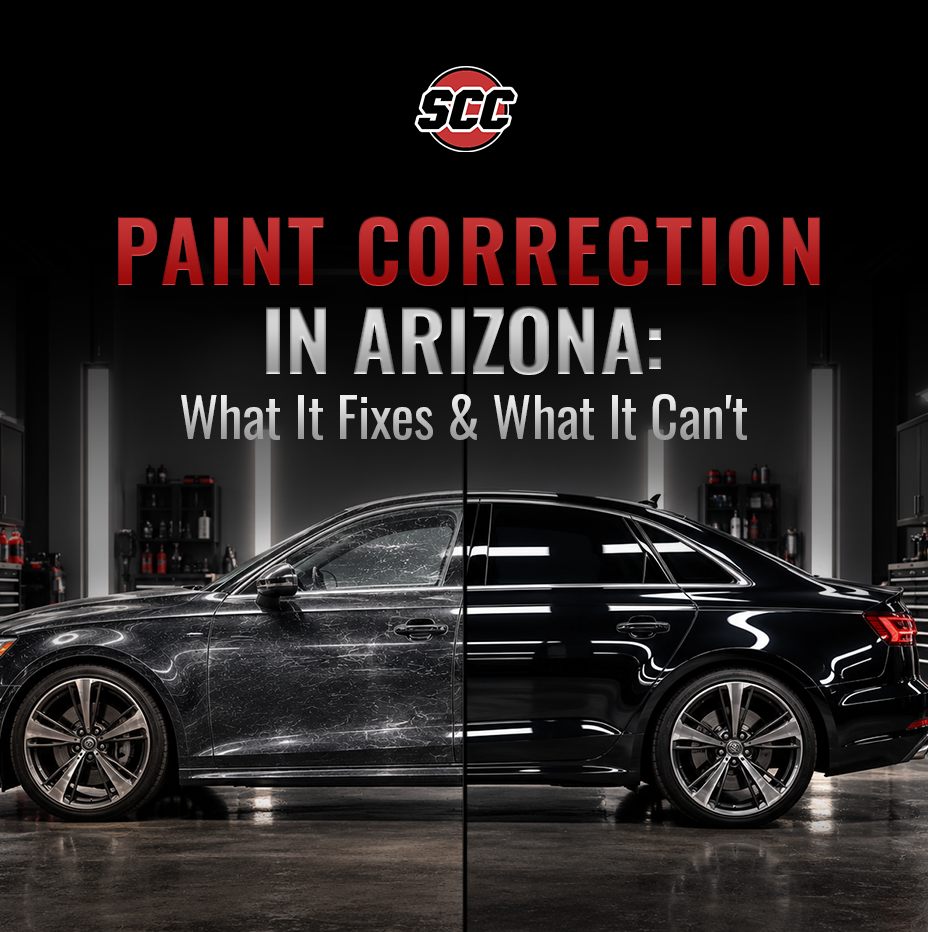
Quick answer: Paint correction is machine polishing that removes a very thin layer of clear coat to level out swirl marks, light scratches, oxidation and light water-spot etching. It cannot fix scratches that cut through the clear coat, rock chips, dents or peeling paint. It is worth doing before PPF or ceramic coating, or when swirls and haze dull your finish. Ask any shop how they measure paint thickness and what is included in the quote.
If your paint looks hazy in the sun, or shows circular scratches that glow under a flashlight, you are probably seeing swirl marks and surface damage in the clear coat. Arizona’s sun, dust and hard water make them common. Paint correction is how they are removed. Here is how it works, what it cannot do, and when it makes sense.
What is paint correction?
Paint correction is the process of machine polishing a vehicle’s clear coat to remove surface defects. A technician uses compounds and polishes on a rotary or dual-action machine to level the clear coat slightly, so scratches and marks that sit in its surface disappear instead of being filled or hidden.
This is different from a wax or glaze, which can mask defects temporarily. Correction removes them.
What can paint correction fix?
- Swirl marks. The fine circular scratches caused by improper washing and drying, or by automatic brush washes.
- Light scratches. Marks that sit in the clear coat, such as those from fingernails around door handles or light contact.
- Oxidation and haze. Dull, chalky or faded clear coat from sun exposure.
- Light water-spot etching. Marks left when hard water dries on a hot panel.
- Holograms. Hazy trails left by previous poor polishing.
Results depend on how deep the damage goes and how much clear coat the paint has to spare.
What can’t paint correction fix?
- Deep scratches. If a scratch cuts through the clear coat, polishing cannot remove it. A rough test is whether a fingernail catches in it, but a technician should confirm.
- Rock chips. These are missing paint, not surface marks.
- Dents. Polishing does not change panel shape. See dent repair options.
- Peeling or failing clear coat. This needs refinishing.
- Rust. This needs repair before any paint work.
Those problems are paint repair, not paint correction. Because SCC Aesthetics is part of the Scottsdale Collision Center family, such refinishing and paint repair can be handled under one roof.
Paint correction vs. polishing vs. detailing
| Service | What it does | Typical goal |
| Detailing | Deep cleans interior and exterior, may add wax or sealant | Clean, refreshed vehicle |
| Polishing (one-step) | Light machine polish to boost gloss and soften minor swirls | Better shine, modest improvement |
| Paint correction (multi-step) | Compound and polish stages to remove more defects | Maximum defect removal before protection |
| Protection (PPF or ceramic coating) | Adds a barrier or coating on top of finished paint | Keep the corrected finish looking good |
Shops use different names for these services, so ask what steps and how many stages are included in the quote.
Why Arizona makes paint correction more common
- Intense UV. Sun exposure year-round oxidizes clear coat and dulls the finish.
- Hard water. Sprinklers and washing leave mineral spots that can etch if they bake on hot panels.
- Dust and monsoon storms. Wiping or washing dusty paint with the wrong technique causes swirl marks.
- Dark vehicles. Black, dark blue and dark gray paint shows swirls more than lighter colors.
For general prevention, read our guide to protecting your car’s paint during an Arizona summer.
Do you need paint correction before PPF or ceramic coating?
Usually, yes. PPF and ceramic coating lock in the paint underneath them, so any swirls or haze stay visible, and a glossy coating can make them stand out more. Correcting first gives the protection a clean surface to bond to.
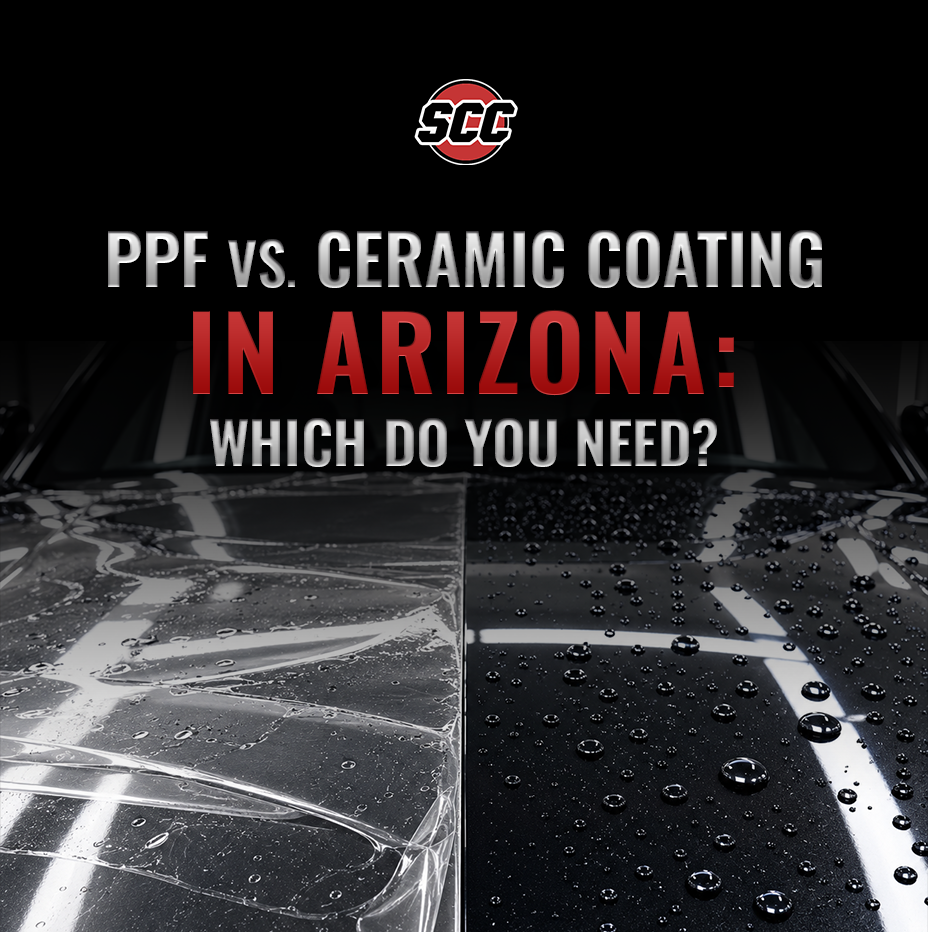
We cover how the two compare in our PPF vs. ceramic coating guide.
How a quality paint correction works
- Inspect. The technician examines the paint under bright, angled light and notes defects.
- Wash and decontaminate. The vehicle is washed and treated to remove bonded contaminants.
- Measure. A paint depth gauge checks how much clear coat is available to work with.
- Test spot. A small area is polished first to choose the right pad and compound.
- Correct. Compound and polish stages remove defects panel by panel.
- Inspect and protect. The finish is wiped down and checked, then protected with a sealant, ceramic coating or PPF.
Because correction removes a thin layer of clear coat, measuring first protects your paint.
What to ask before you book
- Do you measure paint thickness before and during correction?
- How many stages are included, and what results should I expect?
- Which defects will not be removed on my vehicle?
- What protection is applied afterward, and what is the warranty in writing?
- How should I wash the car after correction?
How to keep corrected paint looking good
- Hand wash with clean microfiber, and avoid automatic brush washes.
- Rinse off dust before wiping, instead of dragging it across the paint.
- Dry with a clean microfiber towel, and avoid letting water dry in the sun.
- Add protection, such as ceramic coating or PPF, to help preserve the finish.
Frequently asked questions
What is paint correction? Paint correction is machine polishing that removes a very thin layer of clear coat to level out swirl marks, light scratches, oxidation and light etching. It removes defects instead of covering them.
Is paint correction worth it? It can be, especially before PPF or ceramic coating, on dark vehicles that show swirls, or when haze and oxidation dull the finish. If the damage goes through the clear coat, paint repair is the better fix.
Can paint correction remove scratches? It can remove light scratches that sit in the clear coat. Scratches that cut through the clear coat cannot be polished out and need paint repair.
Does paint correction remove clear coat? Yes, a very thin layer. That is why a good shop measures paint thickness first and stops when the paint has no more to give.
How long does paint correction last? The corrected surface stays as long as it is protected from new damage. Swirls can return with improper washing, so careful care and a protective layer matter.
Do I need paint correction before ceramic coating or PPF? Usually it is recommended, because coatings and films seal in whatever is on the paint underneath.
Is paint correction the same as detailing? No. Detailing cleans and refreshes a vehicle. Paint correction is a machine-polishing process that removes paint defects. Many shops offer both.
Get a free quote at SCC Aesthetics
SCC Aesthetics is Scottsdale Collision Center’s vehicle appearance and protection service, serving drivers across Tempe, Phoenix, Scottsdale and the Valley. We offer paint correction, ceramic coating, paint protection film, window tint, car and fleet wraps, and detailing.
Tell us your year, make and model, and what you are seeing in the paint, and we will recommend the right next step.
Get your free quote or call (602) 777-7921.
SCC Aesthetics · 1321 E Weber Dr, Tempe, AZ 85288 · Monday to Friday, 8 AM to 5 PM





Leave A Comment