May 19, 2026
Reviewed by SCC Certified Collision Specialists with 20+ Years of OEM & High-Performance Repair Experience
As a car owner, you know that nothing quite compares to the thrill of hitting the gas and feeling your vehicle come alive beneath you. The allure of speed is irresistible— whether you’re steering the wide boulevards of Phoenix or through the canyons of Colorado.
From a horseless carriage hitting 73 mph to a hypercar shattering 300 mph, the fastest cars by decade show human ambition at its most exhilarating. This guide covers every landmark speed machine from the 1900s through the 2020s.
Fastest Car of Each Decade at a Glance |
||||
|
Decade |
Car |
Top Speed |
Engine |
Horsepower |
|
1900s |
73 mph |
4.5L Inline-4 |
60 hp |
|
|
1910s |
80 mph |
4-cyl inline |
~80 hp |
|
|
1920s |
119 mph |
8.0L Straight-8 |
~265 hp |
|
|
1930s |
140 mph |
6.9L Supercharged Straight-8 |
320 hp |
|
|
1940s |
135 mph |
3.4L Inline-6 |
160 hp |
|
|
1950s |
151 mph |
Inline-6 |
240 hp |
|
|
1960s |
174 mph |
4.4L V12 |
352 hp |
|
|
1970s |
180 mph |
4.0L V12 |
375 hp |
|
|
1980s |
197 mph |
2.8L Twin-Turbo Flat-6 |
450 hp |
|
|
1990s |
240 mph |
6.1L BMW V12 |
627 hp |
|
|
2000s |
257 mph |
6.3L Twin-Turbo V8 |
1,183 hp |
|
|
2010s |
278 mph |
5.0L Twin-Turbo V8 |
1,160 hp |
|
|
2020s |
304 mph |
8.0L Quad-Turbo W16 |
1,578 hp |
|
1900s: Mercedes-Simplex 60HP
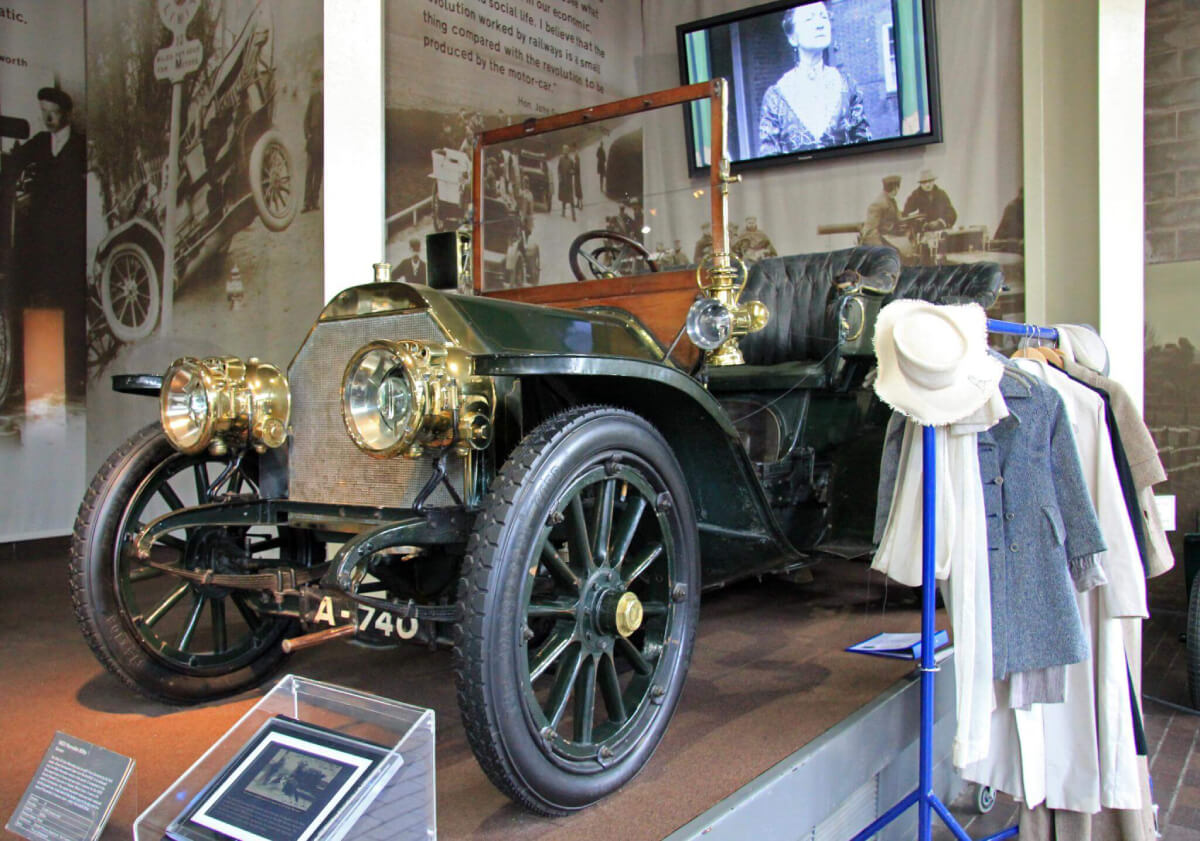
Photo by Karen Roe from Flickr
Top Speed: 73 mph | Engine: 4.5L Inline-4 | Power: 60 HP
The Mercedes-Simplex 60HP, introduced in 1902, is often regarded as the world’s first fastest car. This vehicle featured a robust 4.5-liter inline-four engine that produced 60 horsepower, allowing it to reach a top speed of 73 mph.
Although slow by modern standards, it was an engineering marvel for its time. The Simplex was notable for its advanced engineering and design, which included a lightweight chassis and an innovative suspension system.
1910s: Vauxhall 25-hp ‘Prince Henry’ Sports Torpedo
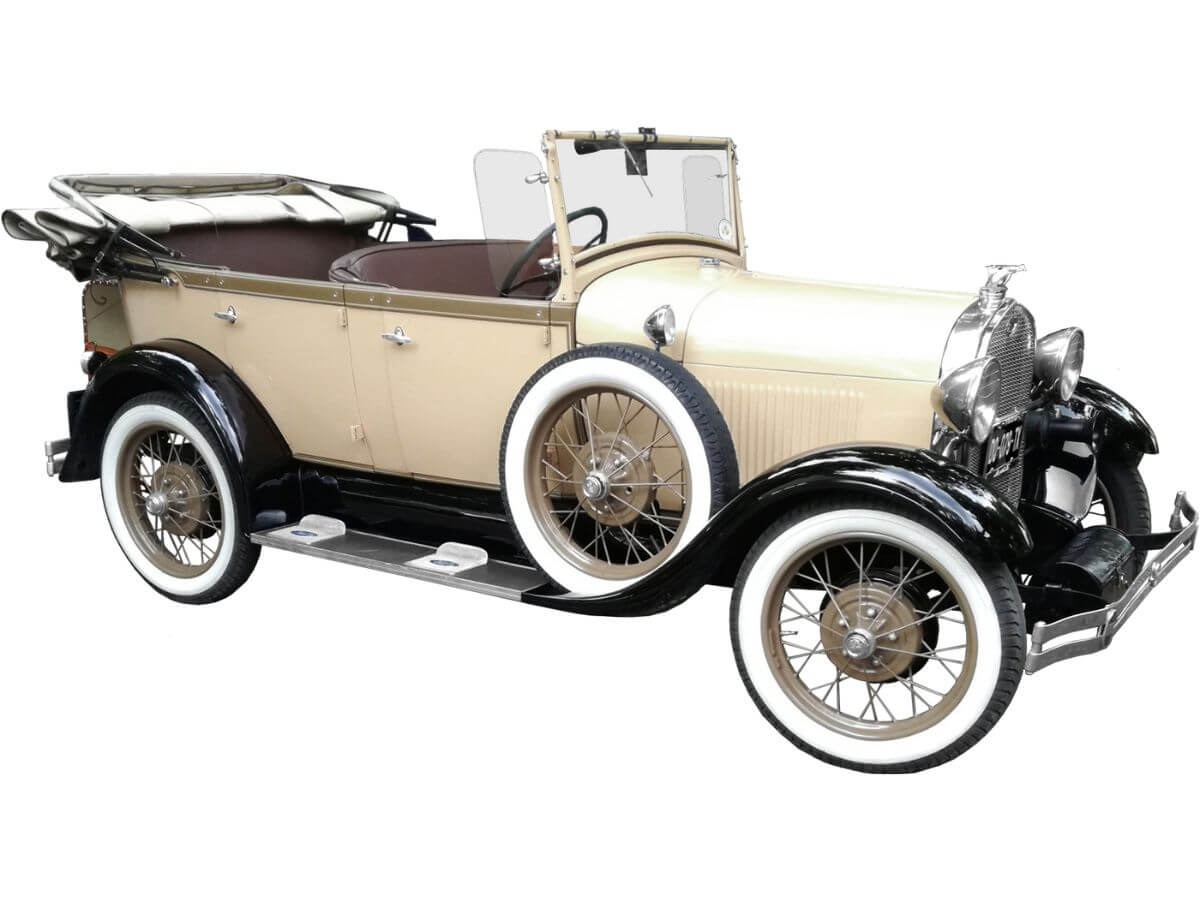
Top Speed: 80 mph | Engine: 4-Cylinder Inline | Power: ~80 HP
The Vauxhall 25-hp ‘Prince Henry’ Sports Torpedo, launched in 1910, marked a significant step forward in automotive speed. With its powerful 4-cylinder engine, the car could reach speeds of up to 80 mph. Its design was characterized by a streamlined body and lightweight construction, making it suitable for both road use and racing. Prince Henry was celebrated for his performance in endurance trials, showcasing the growing interest in speed and competition during this era.
1920s: Duesenberg Model J
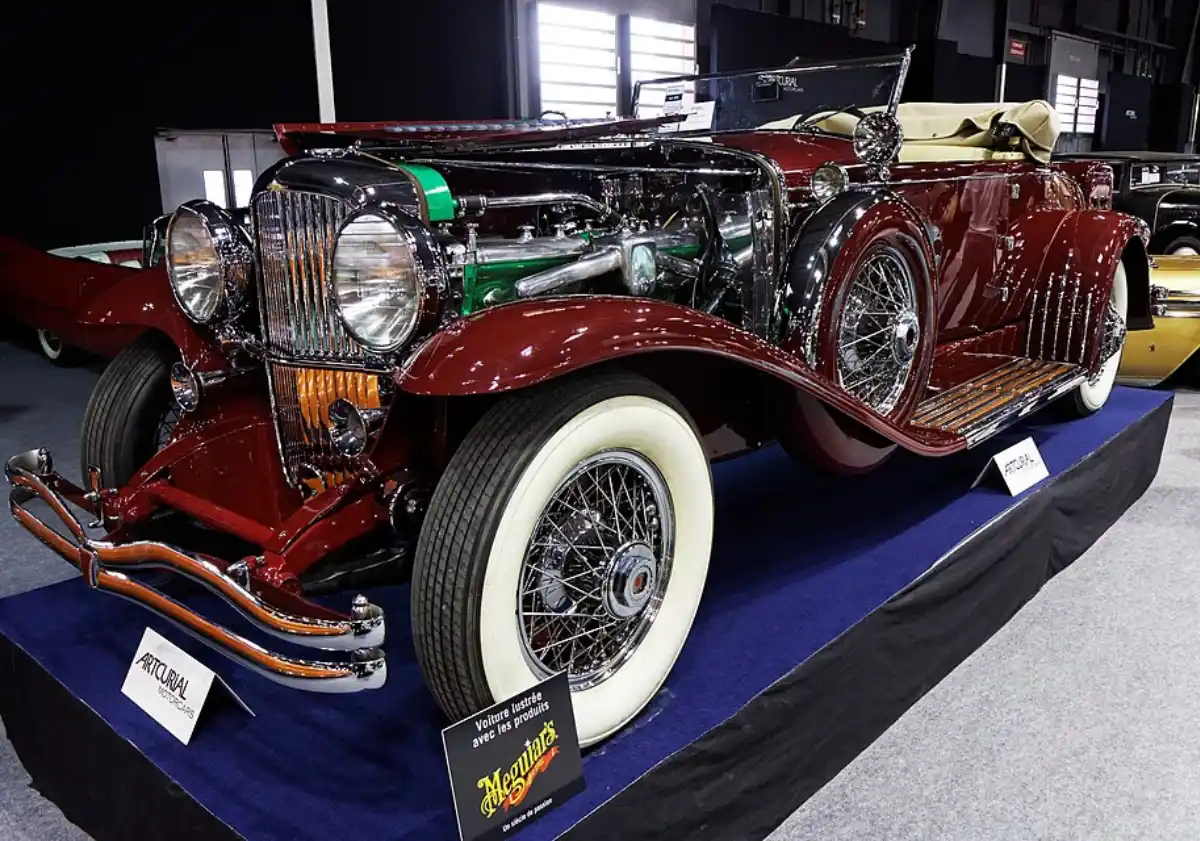
Photo by Thesupermat from Wikimedia Commons
Top Speed: 119 mph | Engine: 8.0L Straight-8 | Power: ~265 HP
In the 1920s, the 1927 Duesenberg Model J emerged as the fastest car, with a top speed of 119 mph. This luxury car combined speed with style and became an iconic vehicle of its time. A massive 8.0-liter straight-eight engine powered the Duesenberg Model J, and its advanced design made it one of the most sought-after cars of the era.
1930s: Duesenberg Model SJ

Photo by Dennis Elzinga from Wikimedia Commons
Top Speed: 140 mph | Engine: 6.9L Supercharged Straight-8 | Power: 320 HP
The 1935 Duesenberg Model SJ was the world’s first fastest car of the 1930s, capable of reaching 140 mph. A supercharged 6.9-liter straight-eight engine powered it, delivering 320 horsepower and ranking it among the most powerful cars of its time. The Model SJ was known for its blend of raw performance and luxury, offering top speeds that were unmatched in its era.
1940s: Jaguar XK120

Photo by HSV from Wikimedia Commons
Top Speed: 135 mph | Engine: 3.4L Inline-6 | Power: 160 HP
Launched in 1948, the Jaguar XK120 quickly became known as the fastest production car of its time, reaching speeds of 135 mph. Driven by a 3.4-liter inline-six engine with 160 horsepower, it blended impressive performance with a striking design. The XK120 featured an elegant body shape that emphasized aerodynamics, contributing to its high-speed capabilities.
|
SCC Expert Note: Vehicles equipped with active aerodynamic systems and carbon-fiber unibody construction require precise post-collision calibration of sensors, cameras, and aero components. Read about SCC’s scanning and calibration services. |
1950s: Aston Martin DB4 GT

Photo by Rex Gray from Wikimedia Commons
Top Speed: 151 mph | Engine: 3.7L Inline-6 | Power: 240 HP
The Aston Martin DB4 GT, introduced in 1958, represented a significant leap in performance and luxury. It reached a top speed of 151 mph, powered by a strong inline-six engine generating 240 horsepower and housed in a lightweight aluminum body. The DB4 GT’s sleek lines and sophisticated design made it an instant classic, appealing to both racing enthusiasts and those seeking elegance on the road.
1960s: Ferrari 365 GTB “Daytona”

Photo by Stahlkocher from Wikimedia Commons
Top Speed: 151 mph | Engine: 3.7L Inline-6 | Power: 240 HP
The 1968 Ferrari 365 GTB “Daytona” was the fastest car in the world during the 1960s, with a top speed of 174 mph. Powered by a 4.4-liter V12 engine generating 352 horsepower, it could accelerate from 0 to 60 mph in only 5.4 seconds. The Daytona became a legend, known for its combination of speed, handling, and striking design.
|
SCC Expert Note: Ferraris from this era use hand-formed steel bodies over a tubular steel frame. Collision repair requires donor panels, custom fabrication, or sourcing NOS parts, which not all auto body shops have access to. This makes auto body repair costs higher. |
1970s: Lamborghini Countach LP400

Photo by Benespit from Wikimedia Commons
Top Speed: 180 mph | Engine: 4.0L V12 | Power: 375 HP
The 1974 Lamborghini Countach LP400 was the fastest automobile of the 1970s, with a top speed of 180 mph. Powered by a 4.0-liter V12 engine producing 375 horsepower, the Countach set new standards for exotic car design and performance. Its sharp, angular styling became iconic, and its impressive speed made it a standout in the supercar world.
1980s: Porsche 959

Photo by M 93 from Wikimedia Commons
Top Speed: 197 mph | Engine: 2.8L Twin-Turbo Flat-6 | Power: 450 HP
The 1986 Porsche 959 held the title of the fastest car in the world during the 1980s, reaching a top speed of 197 mph. Powered by a 2.8-liter twin-turbocharged flat-six engine, it produced 450 horsepower and featured advanced all-wheel-drive technology. Its lightweight, aerodynamic design provided excellent handling at high speeds.
1990s: McLaren F1

Photo by Chelsea Jay from Wikimedia Commons
Top Speed: 240 mph | Engine: 6.1L BMW V12 | Power: 627 HP
The groundbreaking McLaren F1, launched in the early ’90s, redefined what a supercar could be. With an astonishing top speed of 240 mph, it featured a unique central driving position. It featured a V12 engine from BMW, generating approximately 620 horsepower.
The F1’s innovative design included extensive use of lightweight materials like carbon fiber, contributing to its incredible performance.
2000s: SSC Ultimate Aero TT

Photo by Nate Hawbaker from Wikimedia Commons
Top Speed: 257 mph | Engine: 6.3L Twin-Turbo V8 | Power: 1,183 HP
The 2007 SSC Ultimate Aero TT was the fastest car of the 2000s, reaching an impressive top speed of 257 mph. Equipped with a 6.3-liter twin-turbo V8 engine, it delivered 1,183 horsepower. The Ultimate Aero TT set new speed records, outpacing the Bugatti Veyron at the time.
With its advanced engineering and lightweight design, it demonstrated that American automakers could compete with European manufacturers in the hypercar race.
2010s: Koenigsegg Agera RS

Photo by Ben from Wikimedia Commons
Top Speed: 278 mph | Engine: 5.0L Twin-Turbo V8 | Power: 1,160 HP
In the late 2010s, the Koenigsegg Agera RS claimed its place in history by achieving an average top speed of 278 mph, making it one of the fastest production cars ever recorded. Its twin-turbocharged V8 engine produced around 1,160 horsepower, while its lightweight carbon fiber chassis contributed to exceptional handling at high speeds. The Agera RS’s aerodynamic design included active components that adjusted for optimal downforce during high-speed runs.
2020s: Bugatti Chiron Super Sport 300+

Photo by Joshua Hickey from Wikimedia Commons
Top Speed: 304 mph | Engine: 8.0L Quad-Turbo W16 | Power: 1,578 HP
In 2019, the Bugatti Chiron Super Sport 300+ made history as the first production car to exceed 300 mph, reaching a top speed of 304.773 mph during a test run. This incredible achievement was driven by its powerful 8.0-liter quad-turbocharged W16 engine, generating an impressive 1,578 horsepower.
The car’s elongated body and modified rear end reduce drag, allowing it to maintain stability at high speeds. With a 0-60 mph time of just 2.4 seconds, this iconic supercar highlights Bugatti’s focus on speed and engineering.
How Did Automotive Speed Evolve Over Time?
Automotive top speeds increased roughly 4x in 120 years, climbing from 73 mph in 1902 to 304 mph in 2019. Each leap forward came from solving a different bottleneck. In the 1900s, the limit was the engine. By the 1950s, it was aerodynamics. In the 1980s, it was traction.
This evolution happened in four distinct phases:
Phase 1: Mechanical Foundations (1900s–1930s) — 73 to 140 mph
Early speed gains came from bigger displacement and better metallurgy. Engineers doubled top speeds in 30 years simply by building larger, more reliable engines, like the Duesenberg’s 8.0L straight-eight.
The 1930s introduction of supercharging in the Model SJ marked the first time forced induction unlocked speeds above 140 mph.
Phase 2: Post-War Refinement (1940s–1960s) — 135 to 174 mph
World War II redirected engineering talent toward aviation, which paid dividends afterward. Aerodynamics replaced brute force as the primary speed lever.
The Jaguar XK120’s wind-tunneled body and the Ferrari Daytona’s V12 packaging showed that shape and weight distribution mattered as much as horsepower. Disc brakes, independent suspension, and radial tires also made high speeds survivable.
Phase 3: The Supercar Era (1970s–1980s) — 180 to 197 mph
Mid-engine layouts and turbocharging defined this era. The Lamborghini Countach proved that placing the engine behind the driver improved both balance and top speed.
By 1986, the Porsche 959 combined twin-turbocharging, all-wheel drive, and computer-controlled systems to reach 197 mph.
Phase 4: The Hypercar Era (1990s–2020s) — 240 to 304 mph
By this phase, carbon fiber changed everything. The McLaren F1’s carbon monocoque cut weight without sacrificing rigidity, and the 240-mph barrier fell.
From there, advances stacked quickly: quad-turbocharging (Bugatti Veyron, 2005), active aerodynamics (Koenigsegg Agera RS, 2017), and tire technology engineered specifically for 300+ mph runs (Michelin’s Chiron Super Sport tires, 2019).
A Century of Speed: The Iconic Supercars of Each Decade
From 73 mph in 1902 to 304 mph in 2019, the fastest cars by decade represent the relentless human drive to push boundaries. Each machine redefined what was possible, and in doing so, drove innovations in aerodynamics, materials science, and engineering that eventually reached every car on U.S. roads.
For car enthusiasts and collectors, these vehicles are icons. For car techs like us, they’re a reminder of why precision matters in every exotic car frame repair.
Speed is earned through engineering. So is a proper repair.