March 16, 2026

Fender benders happen every day across Arizona. Most drivers brush them off as “no big deal.”
But with modern cars packed with sensors, cameras, and safety systems hiding behind those bumpers? What looks like a simple dent could be chaos inside.
Before you ignore that small dent, let’s take the lid off and see what’s going on inside.
What is a Fender Bender?
A fender bender is a low-speed collision that usually causes minor damage to one or both vehicles. These accidents often happen in everyday driving situations, like:
- Parking lot bumps
- Stop-and-go traffic
- Rear-end taps at traffic lights
- Slow turns at intersection
In Phoenix and the Valley, certain roads are especially accident-prone. Heavy-traffic areas like Loop 101, I‑10, and busy stretches of Scottsdale Road, or near Tempe Town Lake, see more minor collisions simply because so many cars are sharing the road.
Most of the time, the visible damage is small. A scratched bumper. A dented fender. Maybe a cracked taillight. But don’t let it fool you. Even slow impacts can shift parts under the surface. Not to mention, Arizona’s extreme heat can worsen minor damages especially with plastic bumpers and sensors.
Does a Fender Bender Count as an Accident?
Yes, it absolutely does.
Even if the damage looks small, a fender bender collision is still considered a motor vehicle accident. Insurance companies treat it like any other collision, and the same basic rules apply. That means you should handle it properly, even if it feels like “just a bump.”
We’ve been in the industry for over a decade now, and we still see this often in Phoenix, Scottsdale—you name it. Clients tend to underestimate the damage when they can’t see it, and end up coming back with twice the damage they had weeks after the accident. You don’t want to be one of those.
So, here’s what you should do after a fender bender:
- Check for injuries. Call 911 if anyone is hurt.
- Move to a safe spot. Pull over if possible to avoid traffic hazards.
- Exchange information. Get the other driver’s full name, contact, license, and insurance details.
- Document the scene. Take photos of vehicles, damage, and the surrounding area.
- Get a professional inspection. If you can, visit the auto body repair shop or schedule a service right after the accident. Body shops in Phoenix often book out days in advance during stormy seasons and peak traffic hours.
|
IMPORTANT NOTE: Arizona is an “at-fault” state. This means the driver responsible for the collision is legally liable for damages. This applies even in minor fender benders. |
Got into a major car accident? Read our expert car accident guide.
Arizona Insurance Realities Every Driver Should Know
Arizona has some unique insurance challenges that can affect your claim:
- Minimum coverage is common – Many local drivers carry only the state-required minimum liability insurance, which can limit what an insurance company will pay for repairs or injuries.
- High uninsured rate – Roughly 1 in 8 drivers in Arizona operate without insurance.
- Adjuster expectations – Local insurance adjusters usually expect prompt reporting, detailed documentation, and evidence of damage.
Time Limits for Filing a Claim in Arizona
For most personal injury or property damage claims, you have two years from the date of the accident to file a lawsuit under Arizona Revised Statutes § 12‑542. Miss this deadline, and your case can be dismissed—even if your damages are significant.
There’s a stricter exception for accidents involving government vehicles, like city buses or state-owned cars. In those cases, you must file a Notice of Claim within 180 days.
Should You Take Even a Fender Bender With No Damage Seriously?
Yes, because cars today are built differently than they were 20 years ago.
Behind your bumper are impact absorbers, radar sensors, cameras, wiring harnesses, and brackets. These components help run safety features like:
- Backup cameras
- Parking sensors
- Collision detection systems
- Lane assist technology
Even a light tap can knock these systems out of alignment without leaving obvious body damage. That’s why experienced technicians always recommend a post-collision inspection, even after a small bump.
When Should You (And Shouldn’t You) Call the Police After a Fender Bender?
While you absolutely should take every fender bender seriously, you don’t have to call the police for the smallest inconvenience.
Call the Police If…
- Someone is injured, even slightly
- There is significant property damage
- The other driver is uncooperative or refuses to provide insurance info
- You’re unsure who is at fault
- The accident occurred on a busy roadway or created a hazard
No Need to Call If…
- No injuries occurred
- Vehicle damage is extremely minor (e.g., small scratch or paint transfer)
- Both drivers exchanged insurance info amicably
- The accident occurred in a safe, low-traffic area
5 Hidden Damage Signs to Watch For After a Fender Bender
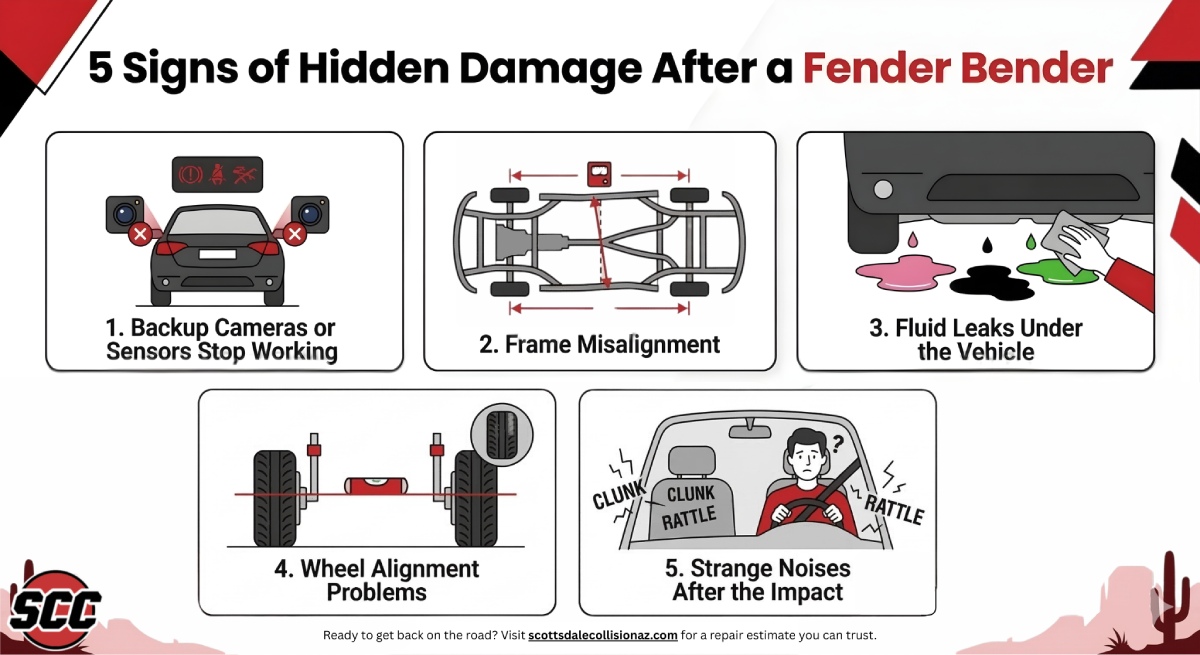
Even small impacts can leave clues that something isn’t quite right. If you notice any of the following issues, that’s your cue to have your vehicle checked at an auto body repair shop.
1. Backup Cameras or Sensors Stop Working
Modern vehicles rely heavily on electronic driver-assistance systems. Unfortunately, those sensors often sit right behind the bumper. That’s why these systems usually require recalibration after a collision.
After a minor collision, you might notice:
- Parking sensors are constantly beeping
- A backup camera that looks misaligned
- Warning lights on the dashboard
- Blind-spot alerts malfunctioning
2. Frame Misalignment
Frame misalignment isn’t always visible at first glance, but you can often feel it while driving. Common signs include a steering wheel that sits crooked, the car pulling slightly to one side, or uneven gaps between body panels.
Leaving them unchecked can lead to bigger problems over time, including uneven tire wear, compromised handling, or additional stress on other components. Schedule car frame repair today.
3. Fluid Leaks Under the Vehicle
Fluid leaks under a car happen when liquids that keep your vehicle running smoothly escape from their systems. These can include:
- Engine oil – lubricates engine parts
- Coolant/antifreeze – keeps the engine from overheating
- Transmission fluid – powers automatic gear shifts
- Brake fluid – essential for stopping safely
- Power steering fluid – helps the steering remain smooth
| SCC Expert Tip: Car sensor scanning and calibration helps find electrical damages that could easily be missed by the naked eye. |
4. Wheel Alignment Problems
If your car starts pulling to one side, the steering wheel feels off-center, or you notice uneven tire wear, your wheel alignment may be affected. Misaligned wheels can make your car harder to control, reduce fuel efficiency, and cause tires to wear unevenly—shortening their lifespan. It can also put extra stress on suspension components.
5. Strange Noises After the Impact
Rattling, grinding, or clunking sounds can mean parts under your car shifted in the collision. Common culprits include loose brackets, suspension damage, or misaligned panels.
What’s Included in an Expert Collision Inspection
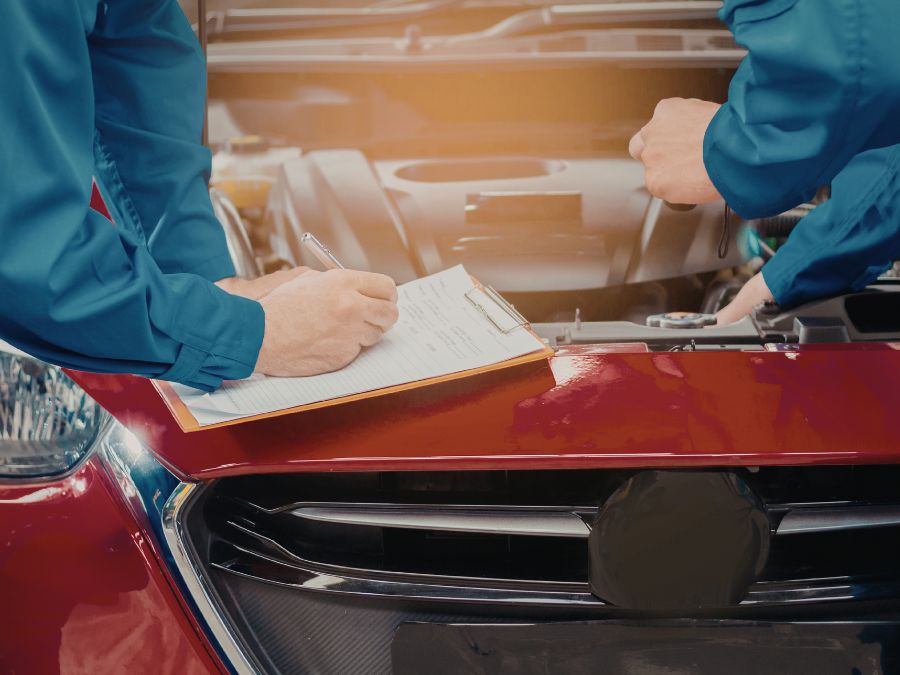
At Scottsdale Collision Center, our technicians check the areas most drivers can’t see, including:
- Structural frame alignment
- Bumper reinforcement components
- Sensor and camera calibration
- Fluid systems and cooling lines
- Suspension and steering components
- Panel alignment and hidden body damage
Whether you need a full auto body replacement or a car dent repair, we’ll walk you through exactly what we find. Get straight answers from people who work on collision repairs every day. Get a FREE quote.
Frequently Asked Questions
How fast does the Phoenix Police Department respond to fender benders?
On average, you can expect to wait 30–90 minutes. Often, for low-speed bumps without injuries, you may be directed to file a report online or by phone, which can be faster and still gives you a report number for insurance purposes.
How long does it take to get a report number in Phoenix?
You can usually receive a report number within 24–48 hours. Having this number is important for insurance claims and documenting your accident.
Can I use the non-emergency number for minor accidents?
Yes. The non-emergency line is ideal for fender benders that don’t involve injuries or heavy damage. Officers can provide guidance, and you can obtain a report number without waiting for an on-scene visit.
When do I need to self-report an accident in Arizona?
Arizona law requires drivers to report accidents that cause injury, death, or property damage over $1,000 to the DMV within 10 days.
What are the steps to take after a fender bender collision in Arizona?
Check for injuries, move to a safe spot, exchange information with the other driver, document the scene with photos, and have your vehicle professionally inspected. Even minor car accidents can hide damage.
Is it worth calling your auto insurance company for a fender bender?
Yes. Reporting the accident protects you and helps cover repair costs. Your insurer can guide you through claims and ensure you get the coverage you’re entitled to.
How long do fender bender repairs take?
Minor repairs often take 1–3 days, depending on parts availability. More extensive repairs, like panel replacement or car frame repair, may take up to a week.
Will insurance cover fender bender repairs?
Typically, yes—if you have collision coverage. Even low-speed impacts are usually covered, though your deductible applies.
Even Minor Accidents are Worth an Expert Check
A minor scrape or dent might not look like much. But under that bumper? There’s a lot more that could be going on behind it.
At Scottsdale Collision Center, we have the expertise to diagnose and repair even the most elusive issues after a fender bender. All you have to do is take your car to us (or call us for a pick-up), and we’ll take it from there.
Your Content Goes Here