
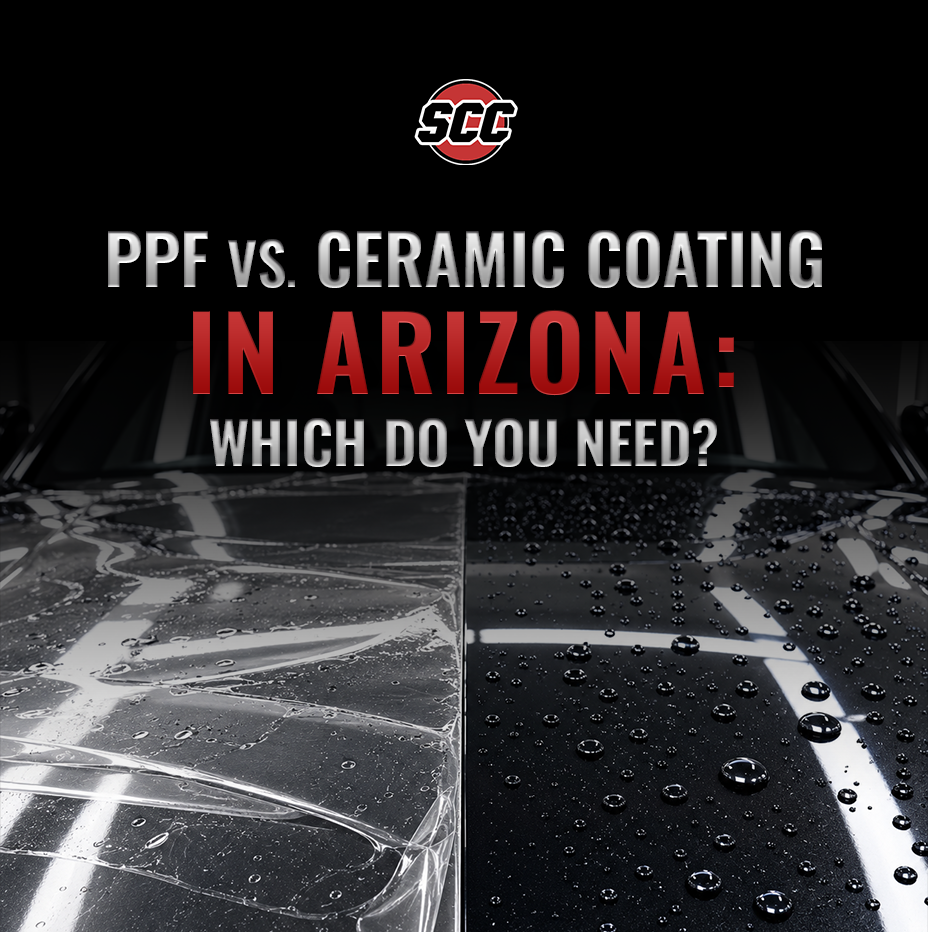
Quick answer: Paint protection film (PPF) is the better choice if your main worry is rock chips, scratches and road debris. Ceramic coating is the better choice if you mainly want gloss, UV resistance and easier washing. Many Arizona drivers use both: PPF on the high-impact front end, and ceramic coating over the film and the rest of the paint.
Arizona is hard on paint. Year-round sun, freeway gravel, monsoon dust and hard water all work on your finish every day. PPF and ceramic coating both help, but they solve different problems. Here is how they compare, and how to choose.
What is paint protection film (PPF)?
Paint protection film, sometimes called clear bra, is a transparent urethane film installed over your paint. It acts as a physical barrier between the paint and everything that hits it.
PPF is best known for three things:
- Rock chip protection. The film absorbs impact from gravel and road debris before it reaches the paint.
- Scuff and scratch resistance. It helps guard against shopping carts, door edges and light abrasion.
- Self-healing. Many modern films recover from light swirl marks when warmed by sun, warm water or engine heat.
You can cover high-impact areas only (front bumper, hood, fenders, mirrors) or the entire vehicle. For a closer look, see what PPF actually protects against.
What is ceramic coating?
Ceramic coating is a liquid polymer applied to clean, prepped paint. It cures into a thin, hard layer that bonds to the surface.
Its main benefits are:
- Deep gloss and shine.
- Water beading and easier washing. Dirt and dust release more easily from the slick surface.
- UV and chemical resistance. It helps slow oxidation and fading.
What it does not do is stop rock chips. The layer is too thin to absorb impact, and it does not self-heal. Think of it as a protective, easy-clean finish, not armor.
PPF vs. ceramic coating: side-by-side
| Factor | PPF | Ceramic coating |
| What it is | Clear urethane film | Liquid polymer, cured on the paint |
| Best at | Stopping chips, scuffs and etching | Gloss, UV resistance, easy cleaning |
| Rock chip protection | Yes, a physical barrier | Minimal |
| Light swirl marks | Self-healing films recover many | Does not self-heal |
| UV and fading | Shields covered panels | Helps resist oxidation |
| Look | Clear gloss, or matte film | Deeper gloss |
| Coverage | Select panels or full vehicle | Entire vehicle |
| Cost | Generally higher | Generally lower |
| Paint prep | Recommended before install | Recommended before install |
Why Arizona changes the math
Most PPF and ceramic coating advice is written for mild climates. In the Valley, a few local factors matter more:
- Intense UV. Sun exposure year-round fades and oxidizes unprotected paint.
- Heat. Bird droppings, bug residue and sap can etch paint faster when baked on a hot panel.
- Freeway debris. Daily driving on I-10, Loop 101 or Loop 202 means constant gravel and road debris at highway speed.
- Monsoon dust and hard water. Dust storms and hard-water spots from sprinklers or washing leave marks that a slick coating helps rinse away.
If you want a broader overview, read our guide to protecting your car’s paint during an Arizona summer.
Which one should you choose?
Choose PPF if:
- You have a new or newer vehicle and want to keep the factory paint intact.
- You drive long freeway commutes and rock chips are your biggest concern.
- Your vehicle has a dark or high-gloss finish that shows chips easily.
Choose ceramic coating if:
- Your main goal is gloss and a car that is easier to wash.
- You want broader paint protection at a lower starting cost.
- Your vehicle is mostly garage-kept or driven mainly on city streets.
Choose both if:
- You want impact protection on the front end plus a slick, glossy finish everywhere.
- You plan to keep the vehicle long-term and want to preserve resale appearance.
Ceramic coating is commonly applied over PPF, but compatibility depends on the products used, so confirm the plan with your installer.
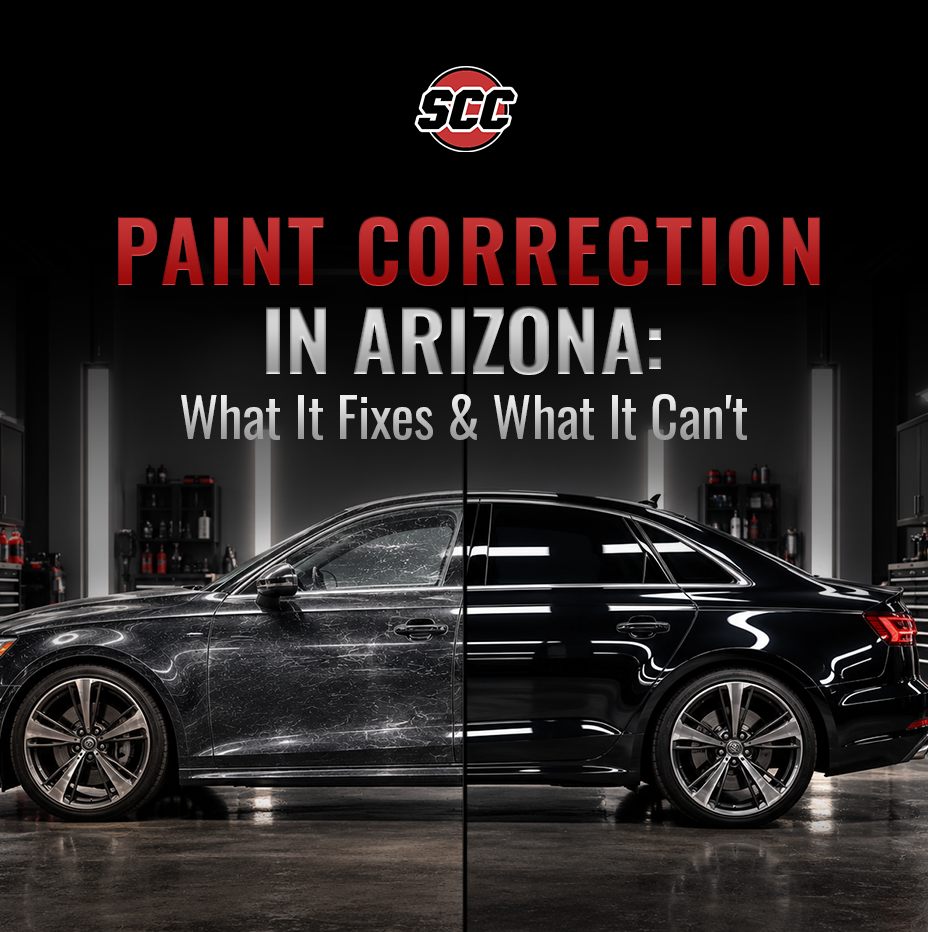
Do you need paint correction first?
Often, yes. Both PPF and ceramic coating lock in whatever is on the paint underneath. Swirl marks, light scratches and oxidation will stay visible, and in some cases look more obvious under a glossy layer.
Paint correction is machine polishing that removes light defects from the clear coat before protection goes on. It has limits: a scratch that cuts through the clear coat needs paint repair, not polishing. Because SCC Aesthetics is part of the Scottsdale Collision Center family, that kind of automotive paint work can be handled under one roof.
What to ask before you book
Use these questions with any shop, including us:
- Which film or coating brand do you use, and what are the warranty terms in writing?
- Is paint correction included, or quoted separately?
- Which panels are covered, and how are the edges finished?
- How long will my vehicle be in the shop?
- What are the aftercare instructions, and when can I first wash the car?
A good shop answers these clearly and puts the details on the estimate.
How to care for PPF and ceramic coating in Arizona
- Wash regularly and rinse off bird droppings and bug residue promptly.
- Hand wash when you can, and avoid harsh chemicals and abrasive brushes.
- Park in shade or a garage when possible.
- Follow your installer’s aftercare instructions, especially in the first days after install.
A detail now and then helps too. See what to expect in our car detailing before-and-after guide.
Frequently asked questions
Is PPF worth it in Arizona? For many drivers, yes. PPF is the option built to physically absorb rock chips, and Arizona’s freeway debris and UV exposure are both hard on paint. It is most valuable on new vehicles and high-impact areas like the bumper, hood and fenders.
Is ceramic coating worth it in Arizona? It can be, if you value gloss, easier washing and added UV and chemical resistance. It will not stop rock chips, so it works best as a complement to PPF or on vehicles that see less highway driving.
Can you put ceramic coating over PPF? Yes, ceramic coating is commonly applied over PPF to add gloss and make the film easier to clean. Compatibility depends on the specific film and coating, so ask your installer to confirm.
Does ceramic coating stop rock chips? No. Ceramic coating is a thin chemical layer and does not absorb impact. For chip protection, PPF is the right tool.
How long do PPF and ceramic coating last? Lifespan varies by product, installation quality, driving conditions and how well you maintain it. Ask for the manufacturer and shop warranty terms in writing instead of relying on a general estimate.
Is PPF the same as a clear bra? Yes. “Clear bra” is an older name for paint protection film, originally used for front-end coverage. Today PPF can cover select panels or the full vehicle.
Do I need paint correction before PPF or ceramic coating? Usually it is recommended. Correction removes light swirls and oxidation so they are not sealed in. Deeper scratches that pass through the clear coat require paint repair.
Get a free quote at SCC Aesthetics
SCC Aesthetics is Scottsdale Collision Center’s vehicle appearance and protection service, serving drivers across Tempe, Phoenix, Scottsdale and the Valley. We offer paint protection film, ceramic coating, paint correction, window tint, car and fleet wraps, and detailing.
Tell us your year, make and model, and we will recommend the right protection for how you drive.
Get your free quote or call (602) 777-7921.
SCC Aesthetics · 1321 E Weber Dr, Tempe, AZ 85288 · Monday to Friday, 8 AM to 5 PM



Leave A Comment