
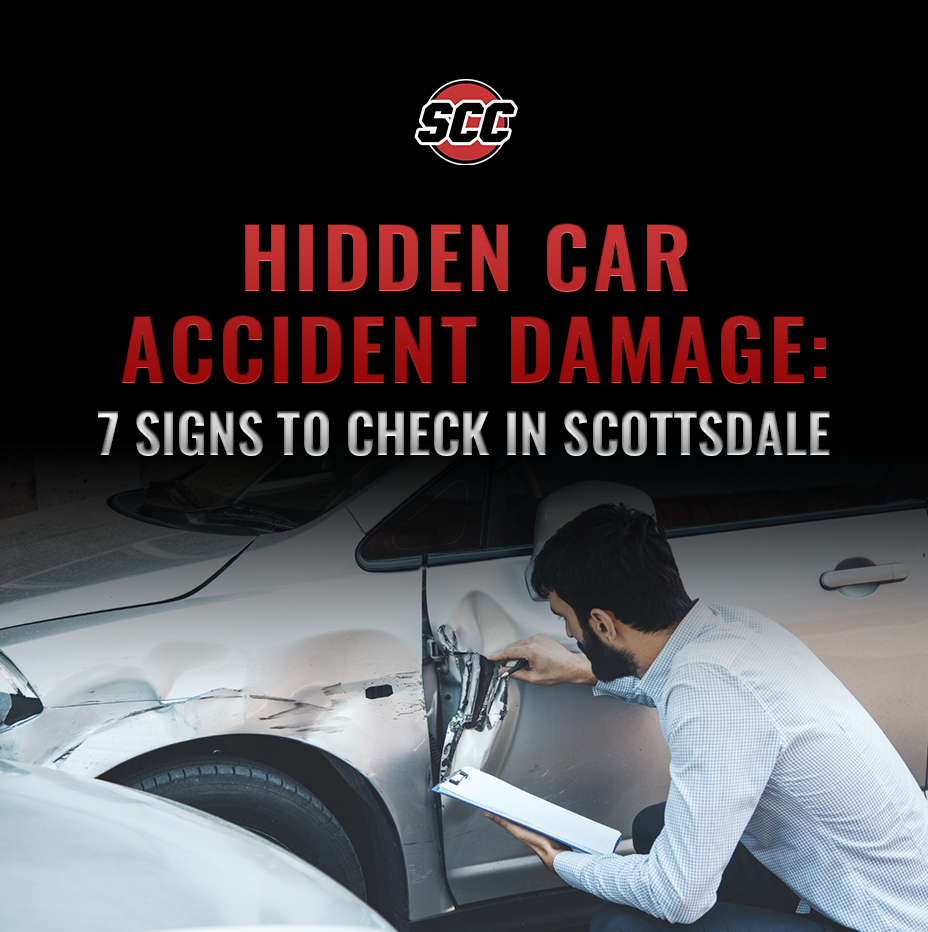
Not every car accident leaves behind obvious damage. Sometimes, a minor collision results in little more than a scratched bumper or a small dent. But what appears to be a cosmetic issue could be hiding damage beneath the surface.
Modern vehicles are built with complex structural components, electronic sensors, and safety systems. Even a relatively low-speed impact can affect parts that are not immediately visible.
For drivers in Scottsdale, Tempe, and Phoenix, understanding the warning signs of hidden collision damage can help prevent additional repair problems and identify potential safety concerns.
Here are seven signs your vehicle may need a professional collision inspection.
What Is Hidden Car Accident Damage?
Hidden collision damage refers to problems caused by an accident that cannot be easily identified through a basic visual inspection.
Damage may occur behind bumpers, beneath exterior panels, within structural components, or inside electronic systems.
Examples include:
- Bent reinforcement bars
- Damaged bumper brackets
- Misaligned structural components
- Broken sensor mounts
- Suspension damage
- Electrical wiring problems
- Compromised safety-system components
Some of these issues may not become noticeable until the vehicle is driven or inspected more thoroughly.
1. Your Car Pulls to One Side While Driving
If your vehicle begins pulling left or right after a collision, it may indicate an alignment, steering, suspension, or tire-related issue.
An impact can affect suspension components even when exterior body damage appears minor.
You may notice:
- Uneven steering response
- Difficulty maintaining a straight path
- A steering wheel that is no longer centered
- Unusual tire wear
These symptoms should be evaluated before continued driving, especially if steering feels unstable.
2. Your Bumper Looks Fine but Feels Loose
Modern bumpers are designed with multiple components, including an exterior cover, internal reinforcement, mounting brackets, and energy-absorbing materials.
After a collision, the bumper cover may return close to its original shape while internal components remain damaged.
Signs of possible hidden bumper damage include:
- Loose or uneven bumper panels
- Unusual gaps between body panels
- Rattling noises
- Broken mounting clips
- Misaligned headlights or taillights
A professional inspection can determine whether internal bumper components need repair or replacement.
3. Dashboard Warning Lights Appear After the Accident
A collision can affect electronic components, sensors, and wiring.
Warning lights may indicate problems involving:
- Airbag systems
- Anti-lock brakes
- Electronic stability control
- Parking sensors
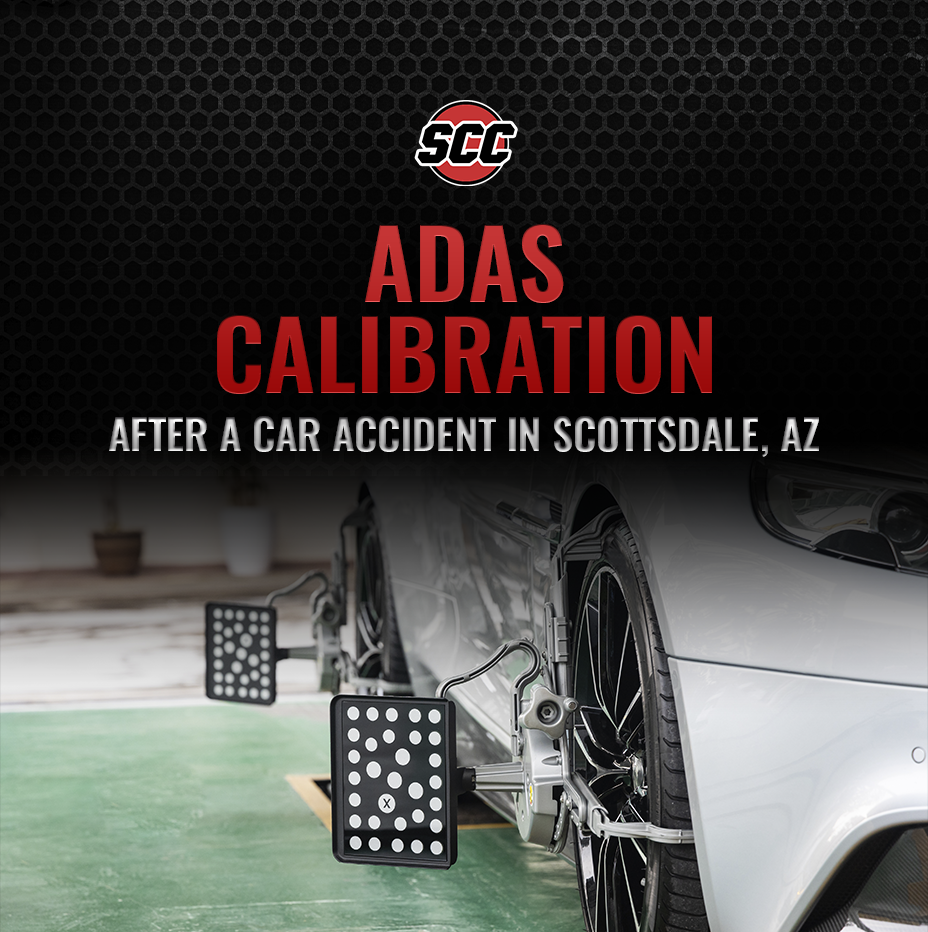
- Advanced driver assistance systems
Even if your vehicle seems to drive normally, these warnings should not be ignored.
A diagnostic scan may help identify stored fault codes and determine which systems require additional inspection.
4. Doors, Hood, or Trunk No Longer Close Properly
One possible sign of structural or panel misalignment is difficulty opening or closing parts of the vehicle.
For example, you may notice:
- A door requiring extra force to close
- Uneven gaps between panels
- A hood that does not align correctly
- A trunk that sticks or fails to latch
- New wind noise while driving
These problems can result from damaged hinges, latches, mounting points, or structural components.
Not every alignment issue indicates frame damage, but a collision repair professional should identify the underlying cause.
5. You Hear New Noises While Driving
Unusual sounds after a collision may indicate damaged or displaced components.
Common examples include:
- Rattling from the bumper area
- Grinding near a wheel
- Clunking over bumps
- Squeaking during turns
- Vibrations at certain speeds
These symptoms can have several causes, including suspension, wheel, brake, or body-component damage.
If a vehicle develops unusual noises after an accident, an inspection is recommended.
6. Your Vehicle Has New Vibrations or Handling Problems
A vehicle that suddenly feels different after a collision may have damage affecting its wheels, suspension, steering, or structural alignment.
Potential warning signs include:
- Steering wheel vibration
- Uneven handling
- Increased road noise
- Difficulty turning
- Changes in braking behavior
Some problems may make the vehicle unsafe to operate.
If steering, braking, or vehicle stability is affected, avoid driving until the vehicle has been evaluated.
7. Your Parking Sensors or Safety Features Stop Working
Many modern vehicles use cameras, radar sensors, and electronic modules to support driver assistance features.
Depending on the vehicle, these systems may include:
- Blind spot monitoring
- Lane departure warnings
- Automatic emergency braking
- Adaptive cruise control
- Parking assistance
A collision may damage sensors, brackets, wiring, or related components.
Even when no dashboard warning appears, some systems may require inspection or calibration after certain repairs.
Can a Minor Accident Cause Structural Damage?
Yes, although the likelihood and severity depend on the circumstances of the collision.
Vehicle speed, impact angle, vehicle design, and the location of contact can all influence the resulting damage.
A small exterior dent does not automatically mean the vehicle has structural damage. Likewise, limited visible damage does not guarantee that internal components are unaffected.
Professional measurements and inspection procedures can help determine whether structural repairs are necessary.
How Do Collision Repair Shops Find Hidden Damage?
A thorough collision repair inspection may involve several steps.
Visual Inspection
Technicians examine exterior panels, gaps, mounting points, and visible structural components.
Diagnostic Scanning
Electronic scans can identify certain fault codes and communication problems in vehicle systems.
However, scanning alone cannot detect every type of damage.
Disassembly and Damage Assessment
In some cases, removing exterior components is necessary to inspect reinforcement structures, brackets, and other concealed parts.
Structural Measurements
Specialized measuring equipment may be used when structural misalignment is suspected.
Repair Planning
Once the damage has been identified, the repair facility can develop a repair plan based on the vehicle manufacturer’s procedures and the specific conditions of the vehicle.
Why You Should Not Ignore Hidden Collision Damage
Undetected damage can lead to additional problems over time.
Depending on the affected components, consequences may include:
- Premature tire wear
- Poor handling
- Water intrusion
- Malfunctioning safety features
- Additional repair expenses
- Reduced performance of damaged components
More importantly, some types of hidden damage can affect vehicle safety.
Addressing potential problems early helps ensure that necessary repairs are identified.
Professional Collision Repair in Scottsdale, Tempe, and Phoenix
At Scottsdale Collision Center, we understand that accident damage is not always visible from the outside.
Our collision repair services include auto body repair, structural repair, diagnostic scanning, and calibration-related services.
Our repair process begins with assessing the vehicle’s damage and developing a repair plan.
Whether your vehicle has a damaged bumper, misaligned panels, or possible structural issues, our team can help determine the appropriate repair approach.
We serve drivers throughout Scottsdale, Tempe, Phoenix, and surrounding Arizona communities.
Frequently Asked Questions About Hidden Collision Damage
Can a car have hidden damage after a minor accident?
Yes. Even relatively minor collisions can affect components behind exterior panels, including bumper supports, brackets, and electronic sensors.
How do I know if my car has frame damage?
Possible signs include uneven panel gaps, handling changes, and structural misalignment. However, a professional inspection and appropriate measurements are needed to confirm structural damage.
Can hidden damage affect my car’s safety systems?
Yes. Depending on the impact, sensors, wiring, mounting brackets, or other safety-related components may be affected.
Should I get my car inspected after a small accident?
An inspection is advisable when there is visible damage, new warning lights, handling changes, unusual noises, or uncertainty about the condition of safety-related components.
Will insurance cover hidden collision damage?
Coverage depends on the policy, circumstances of the accident, and insurer’s claim determination. Additional damage discovered during repairs may require a supplemental estimate.
Schedule a Collision Repair Estimate in Scottsdale, AZ
Think your vehicle may have hidden damage after an accident?
Do not rely on appearance alone to determine whether your vehicle needs repairs.
Scottsdale Collision Center provides collision repair services for drivers in Scottsdale, Tempe, Phoenix, and nearby communities.
Our team can evaluate visible damage, identify concerns that may require additional inspection, and help explain the repair process.
Request a Free Collision Repair Estimate today.
Call (602) 777-7921 or contact Scottsdale Collision Center to get started.
Vehicle safety note: If your car has steering, braking, suspension, or serious safety-system problems after an accident, avoid driving it until a qualified professional determines whether it is safe to operate.





Leave A Comment