March 9, 2026
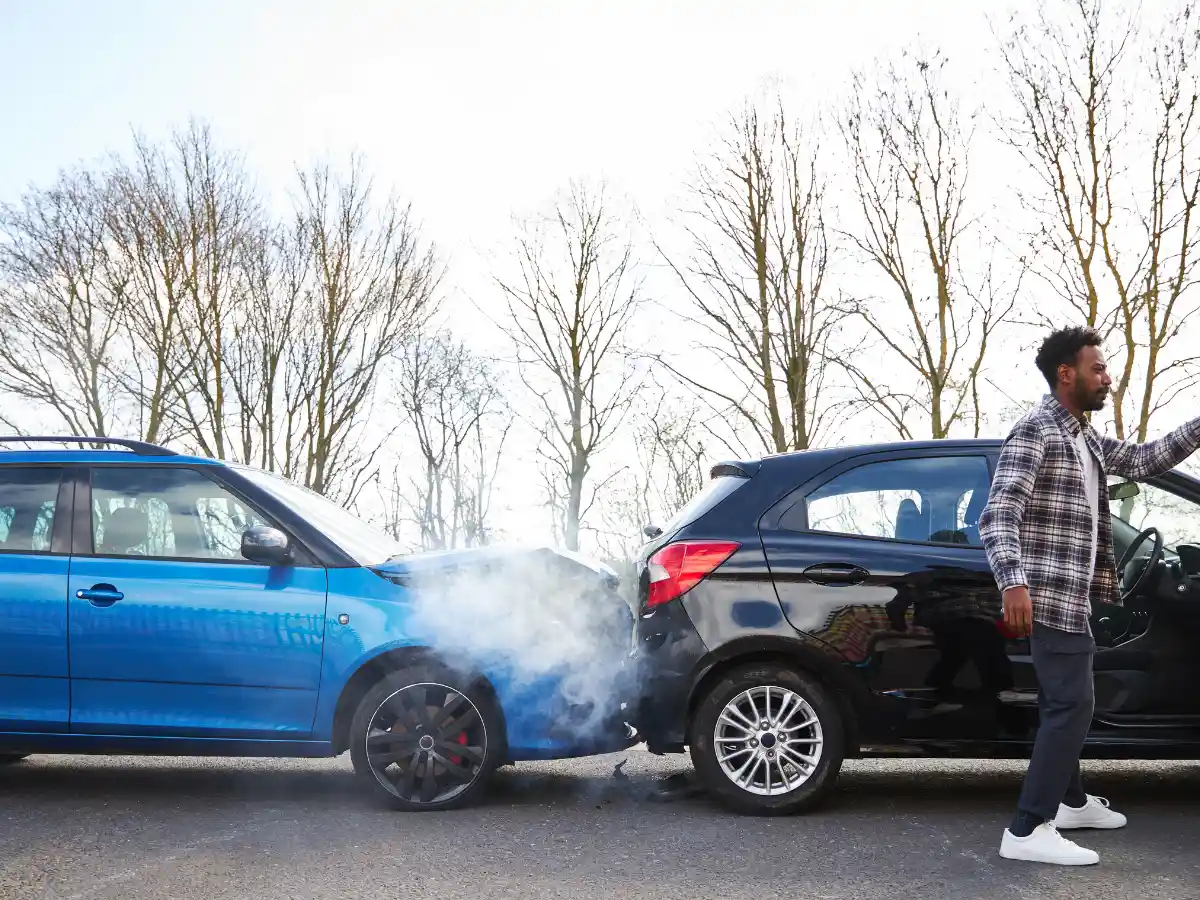
No one sees it coming. One second, you’re on your way to work; the next, you’re pulled over, heart racing, trying to figure out what just happened.
Arizona collisions are far more common than you’d expect. In 2024 alone, the state recorded more than 121,000 vehicle crashes, leaving over 54,000 people injured and 1,228 killed on Arizona roads. That averages more than three traffic deaths every day.
A collision overwhelms even the best of us. However, knowing what to do after a car accident gives you a plan when everything else feels out of control.
You Just Got in a Road Accident—What to Do? A Step-by-Step Guide
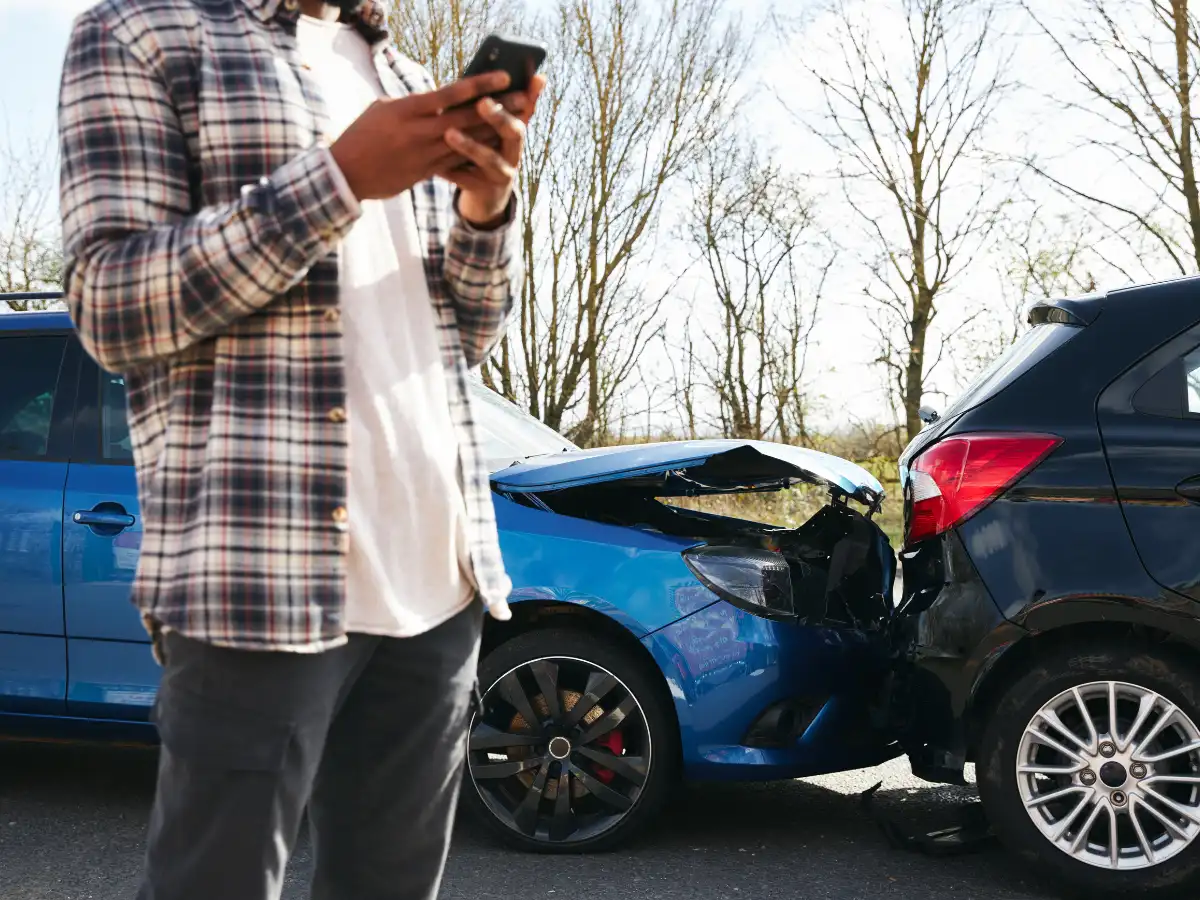
The first thing you should do after a car accident in the Phoenix metro area is to stay calm and assess the situation. Adrenaline can make everything feel chaotic and rushed. The other driver could be screaming at you or worse, unconscious.
What’s important right now is to get a clear sense of what’s happening.
1. Check for Injuries and Call 911
Check yourself and the passengers in your vehicle for injuries. If anyone is hurt—or even appears to be—call 911 right away.
Avoid moving anyone who may be injured unless there is an immediate danger, such as a fire or oncoming traffic. Emergency responders are trained to handle these situations safely.
2. Move to a Safe Location if Possible
If your vehicle is drivable and it’s safe to do so, move it to the side of the road and turn on your hazard lights. If the car cannot be moved, or you’re in a dangerous location, stay inside your vehicle with your seatbelt on until help arrives.
3. Report the Accident
When officers arrive, stay calm and stick to the facts about what happened. Avoid guessing about details or admitting fault. The report they create can be valuable for insurance and documentation later.
If you have a dashcam video, share it with the police for evidence as well.
4. Exchange Information With the Other Driver
After things are stable, exchange basic information with the other driver involved. Be polite, but keep the conversation focused and simple.
Make sure to collect the following details:
- Full name and phone number
- Insurance company and policy number
- Driver’s license number
- License plate number
- Make, model, and color of the vehicle
This is not the time to debate what happened or assign blame. Just gather the information you’ll need later.
If the other driver doesn’t cooperate, get help from the police and explain what you need and what it’s for. Officers can request identification and record the necessary information in the accident report.
5. Take Photos and Document the Scene
Before leaving the area, document as much as you can. Your phone camera can capture valuable details that may help later. Also note the time, location, and anything else you remember about how the crash occurred.
Take photos of:
- Damage to all vehicles
- License plates
- Street signs, traffic lights, or nearby signals
- The position of the vehicles
- Any visible injuries
- Skid marks, debris, or road conditions
| SCC Expert Tip: Get information from witnesses nearby. This will be helpful should the case escalate.
Ask for: ✔️ Their names and contacts ✔️ A brief statement on what they saw ✔️Where they were at the scene |
6. Notify Your Insurance Company As Soon As Possible
Once you’ve left the scene and things have settled down, contact your insurance provider to report the accident. When speaking with your insurance company, stick to clear facts and share the details you documented at the scene.
What should you tell your insurance provider after a car accident in Phoenix and the surrounding areas?
- The date, time, and location of the accident
- A brief description of how the collision happened
- Names and contact information of the other driver(s) involved
- The other driver’s insurance company and policy number
- The police report number, if officers responded to the scene
- Photos or videos of the vehicles and the accident scene
- Contact information for any witnesses
- A description of the damage to your vehicle and any injuries
Your insurance provider may ask follow-up questions, review your photos, and schedule a vehicle inspection. Make sure to stay in contact and available.
7. Bring Your Vehicle to a Repair Shop
| SCC Expert Tip: Don’t just go to the repair shop your insurance provider recommends. Under Arizona car accident laws, you have the right to choose which body shop to take your vehicle to. |
After you file a claim, get your vehicle inspected and repaired. A professional Arizona collision repair shop can assess the damage, provide an estimate, and restore your vehicle safely.
In some cases, your car might look fine outside but not inside. Without checking, your car could suffer from sensor calibration issues or hidden frame damage, which can also put you at risk. A thorough inspection can uncover hidden issues that may affect your vehicle’s safety or performance.
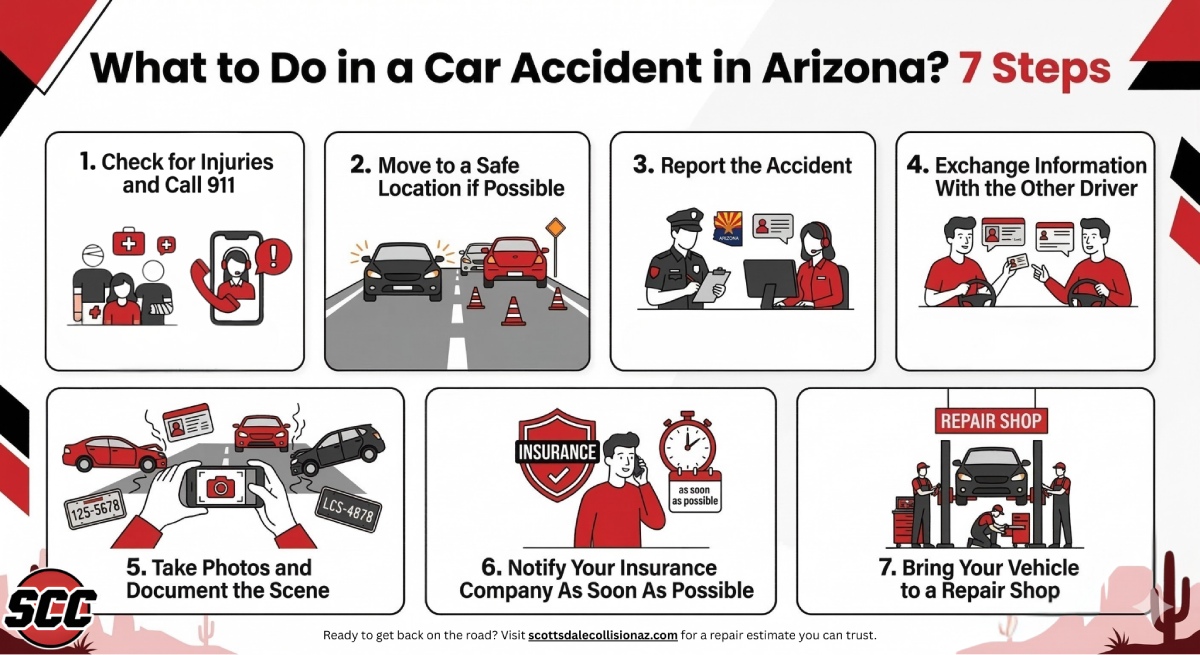
What to Do After a Car Accident in Arizona: A Visual Checklist
What NOT to Do After a Road Accident
Knowing what not to do is just as important as knowing what to do after a car accident. Here are some pointers to remember:
- Don’t Leave the Scene – Never drive away, even if the crash seems minor. Under Arizona Revised Statutes § 28‑662, you’re legally required to stop at the scene of an accident that results in property damage and exchange information, and failure to do so is a criminal offense. You could be charged with a hit‑and‑run misdemeanor.
- Don’t Admit Fault at the Scene – Even if you think you may have caused the accident, avoid apologizing or taking blame. Fault will be determined later based on the police report, witness statements, and insurance investigation.
- Don’t Underestimate Injuries – Even if you feel okay, minor injuries like whiplash or internal bruising may not be immediately apparent. Seek medical attention promptly for yourself and your passengers.
- Don’t Argue or Confront the Other Driver – Arguments or aggressive behavior can escalate tensions and create complications with police or insurance.
- Don’t Forget to Document – Failing to take photos, notes, or witness information can make insurance claims and repairs more difficult. Record as much as possible before leaving the scene.
- Don’t Post About the Accident Online – Avoid sharing details or photos of the accident on social media. Anything you post could be used against you by insurance companies or in legal disputes. Posting false or misleading information publicly could also expose you to legal risks under Arizona’s invasion of privacy and “false light” laws.
Car Accident Hotspots Near Tempe and Scottsdale
Certain areas around Tempe and Scottsdale see more collisions simply because of traffic volume, tight merges, and busy intersections.
If you drive these routes often, it’s worth staying extra alert:
- Loop 101 – One of the busiest highways in the Valley. High speeds, frequent lane changes, and crowded exits make rear-end crashes and sideswipes more common during rush hour.
- U.S. Route 60 – A major commuter route connecting the East Valley to Phoenix. Stop-and-go traffic and sudden braking often lead to minor collisions and chain-reaction fender benders.
- Scottsdale Road – Known for heavy local traffic, busy intersections, and constant turning vehicles.
- Tempe Town Lake Area – Attracts pedestrians, cyclists, tourists, and nightlife crowds. With so many people moving through the area, low-speed collisions and parking lot bumps are fairly common.


Oftentimes, the nearest Arizona collision repair shop isn’t the best one. Here’s how to choose a body shop wisely:
- Check Certifications – Look for shops that are certified by manufacturers or recognized by groups like I-CAR or ASE. These credentials show the technicians have proper training, and the shop meets industry standards.
- Ask About Warranties – Reputable shops usually offer warranties on their repairs. A good warranty gives you peace of mind that the work will last and can be redone if something goes wrong.
- Get Multiple Estimates – It’s okay to get more than one estimate before deciding. This helps you understand what’s being repaired and how different shops price their services.
- Read Reviews and Ask Around – Online reviews can offer real insights into customer service, turnaround times, and repair quality. Ask friends or family if they’ve had good experiences with any local shops.
- Check Their Communication Style – A shop should be upfront about timelines, costs, and the steps involved. If they’re vague, hard to reach, or rush you through questions, that’s a red flag.
- Understand Their Process – Ask how they handle insurance claims, if they work with OEM parts (original equipment manufacturer), and how they’ll keep you updated during repairs.
- Ask About Specific Repairs – Collision repair includes various fixes, from frame repairs to dent repair. If your car has significant dents, ensure the shop has the right tools and expertise, such as Paintless Dent Repair (PDR), which can be faster and more affordable in some cases.
Choosing the right shop is one of the most important steps to take after a car accident. Take your time and go to a place that earns your confidence.
Frequently Asked Questions
How much does it cost to repair a car after a collision?
Minor dents or bumper scrapes can cost a few hundred dollars, while frame damage or major collisions can run into thousands. To check how much you need, get a free vehicle collision inspection.
Is it better to have a car totaled or repaired?
It depends on the repair cost vs. the car value. If repairs exceed the car’s market value, insurance may consider it totaled. However, if your car has sentimental value or the damage is fully repairable, then it’s worth the shot.
How long does collision repair take?
Minor repairs, like bumper dents or scratches, usually take 2–5 days. More extensive work, such as frame straightening or structural repairs, can take 1–2 weeks or longer.
Is it worth fixing a crashed car?
Yes, as long as the repairs return it to a safe, reliable condition and the insurance coverage makes it feasible.
Is Arizona an at-fault state?
Yes, Arizona is an at-fault state. This means that the driver responsible for causing the accident is liable for damages. This affects how insurance claims are handled and why proper documentation and professional repairs are important after a collision.
Who pays for vehicle repair after a car accident in Arizona?
Typically, the at-fault driver’s insurance covers the cost of repairs. If you have underinsured motorist coverage, it can help fill gaps if the other driver’s policy is insufficient.
Do I need to hire a car accident lawyer after an accident in the Phoenix metro?
Not always. But if injuries are involved, liability is disputed, or insurance negotiations get complicated, legal guidance can protect your rights.
Need Help After an Unexpected Accident in the Phoenix or Scottsdale area? Drive Right Through
Being involved in a collision is stressful, regardless of the extent of the damage. However, repairing your vehicle doesn’t have to be stressful.
At Scottsdale Collision Center, we make it easy. Whether you’re unsure of what to do after a car accident, need help working with insurance, or just want your vehicle repaired the right way, we’re here for you. In situations where an accident may involve more complex circumstances, such as legal questions following an incident, some drivers may also choose to speak with a DUI lawyer in Phoenix for additional guidance.
Call Scottsdale Collision Center anytime or stop by. We’ll take it from here.